
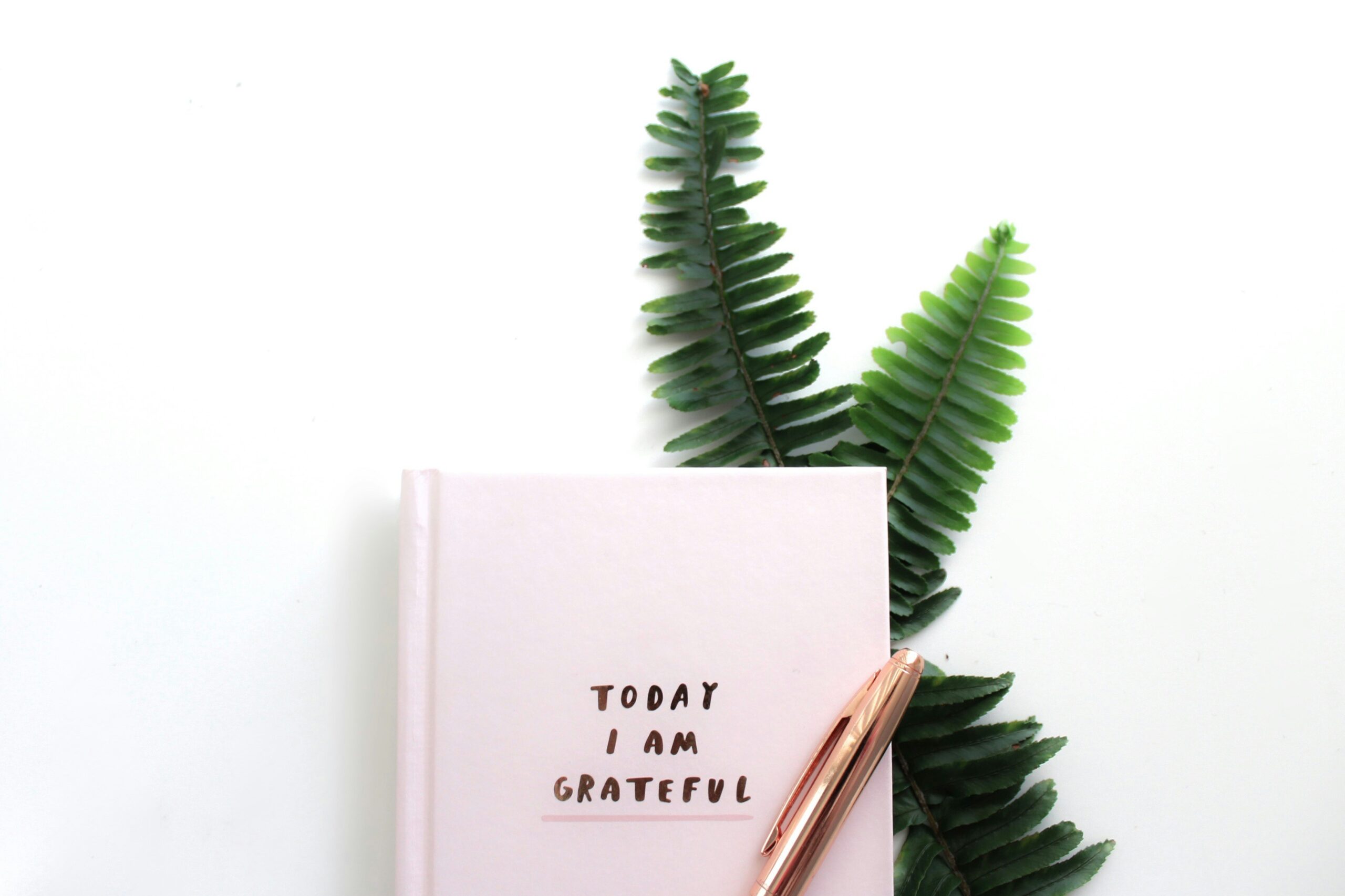
If you’ve ever thought about starting a gratitude journal but didn’t know where to begin… you’re not alone.
Maybe you’ve wondered:
- What do I even write?
- Will I stick to it?
- Will it actually make a difference?
The good news is this: learning how to start a gratitude journal doesn’t have to be complicated.
In fact, the simpler you make it, the more powerful it becomes.
This guide will walk you through exactly how to start—step by step—so you can build a habit that helps you feel calmer, more positive, and more grounded every day.
This post may contain affiliate links, which means I may earn a small commission at no extra cost to you. I only recommend products that I truly believe can support you on your journey.

Why Start a Gratitude Journal?
Before we get into how, let’s talk about why.
A gratitude journal can help you:
- shift your focus away from stress
- notice the good in your day
- feel more present and calm
- build a more positive mindset over time
And the best part?
👉 You don’t need to do it perfectly to feel the benefits.
How to Start a Gratitude Journal (Step-by-Step for Beginners)
If you’ve been wondering exactly how to start a gratitude journal, here’s a simple process you can follow starting today.
Step 1: Choose Your Journal
You can use:
- a notebook
- a digital document
- a guided journal
The key is choosing something that feels easy and inviting.
If you’ve ever felt stuck staring at a blank page, a guided option can make a big difference.
That’s exactly why I created a simple 30 Day Gratitude Reset Journal—to help you start and stay consistent without overthinking it.
It includes:
✔ gentle daily prompts
✔ a clear, simple structure
✔ space to reflect without pressure
👉 You can explore it here: 30 Day Gratitude Reset Journal
👉 Or try the free 7-day version: FREE 7-day gratitude journal
If you’re not sure which type of journal is right for you, you can explore some of the best gratitude journals for beginners to find one that fits your style.
Step 2: Pick a Time That Works for You
Consistency matters more than timing.
You can write:
- in the morning (to start your day positively)
- at night (to reflect and unwind)
👉 Choose a time that fits naturally into your routine.
Step 3: Start Small (This Is Important)
One of the biggest mistakes beginners make is trying to do too much.
Instead, start with:
👉 1–3 things you’re grateful for
That’s it.
They can be simple:
- a quiet moment
- a kind message
- your morning coffee
Small things matter.
And if you ever feel stuck, these gratitude journal prompts for beginners can help you get started on even the busiest days.
Step 4: Be Real, Not Perfect
Your gratitude journal doesn’t have to sound poetic or deep.
It just needs to be honest.
Some days might feel easy.
Some days might feel harder.
Both are okay.
And if you ever find yourself unsure what to write once you get started, this guide on what to write in a gratitude journal when you feel stuck can help you find simple ideas and get back into the flow.
Step 5: Add a Simple Reflection
If you want to go a little deeper, try adding:
- Why did this moment matter?
- How did it make me feel?
This helps:
- strengthen positive thinking
- make the habit more meaningful
Step 6: Keep It Easy to Stick With
The simpler your process, the more likely you are to continue.
That’s why structure can be so helpful—especially in the beginning.
👉 You don’t have to think about what to write
👉 You just show up and follow the prompts
What to Write in a Gratitude Journal (Examples)
If you’re still unsure what to write, here are some ideas:
- Something that made you smile today
- A person you appreciate
- A small win
- A moment of calm
- Something you’re looking forward to
👉 There’s no “right” answer—just your answer.
Simple Tools That Make It Easier
Starting is one thing—sticking with it is another.
Helpful tools include:
- guided journals (for structure)
- simple notebooks
- calming environments (like a quiet space or candle)
👉 These don’t make the habit—but they support it.
Why Gratitude Journaling Actually Works
Gratitude journaling works because it helps you:
- shift your focus
- retrain your thinking patterns
- notice what’s going well (even on hard days)
Over time, this creates a more positive and balanced mindset.

FAQ: How to Start a Gratitude Journal
Start simple—write 1–3 things you’re grateful for each day and keep it consistent.
You can write anything that made your day better, even small moments.
Daily is ideal, but even a few times a week can make a difference.
Start small. Even neutral or simple things count.
Before You Go
Starting a gratitude journal isn’t about doing it perfectly.
It’s about creating a small moment each day to pause, reflect, and notice what’s still good.
You don’t need to write pages.
You don’t need to force anything.
Just start.
Have you tried gratitude journaling before?
Save this post so you can come back to it
Share it with someone who might need a gentle reset
And if you’re looking for a simple way to begin without overthinking it, having a little structure can make all the difference.
From the Author
Thank you for reading to the end — that alone shows your desire to grow, to reflect, to live with more gratitude. You already have everything you need to move forward with peace and joy; it’s just about seeing your life through a lens of appreciation. Wherever you are today, let gratitude lead the way — and keep walking The Grateful Path.
One step at a time, with a thankful heart, along the Grateful Path.
Related Articles You Might Enjoy:
Best Gratitude Journals for Beginners (That Actually Help You Feel Better) – Find the best gratitude journal FOR YOU!
Gratitude Journal Prompts for Beginners (That Actually Make You Feel Better) – Prompts to help you start and maintain a gratitude journaling practice
What to Write in a Gratitude Journal When You Feel Stuck (Simple Ideas That Help) – Ideas to help you get unstuck quickly.
This Is the Best Day Ever: A Child-Inspired Perspective on Daily Happiness – A laugh-out-loud adventure that changed the way I see the world (even on hard days).
Best Self Care Gifts for Stress Relief (That Actually Help You Relax) – Gifts for relaxation and comfort.